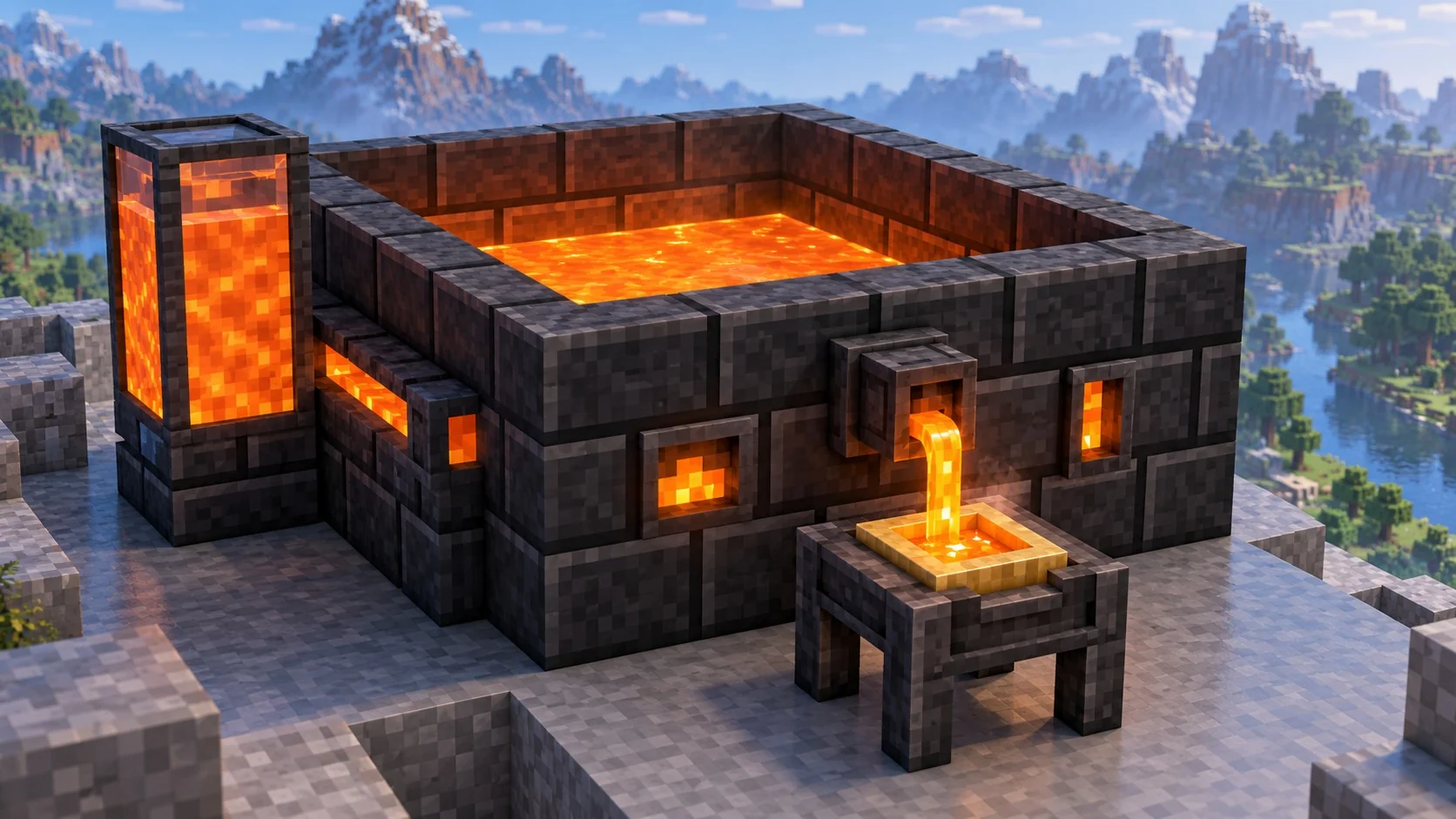
The Tinkers Construct smeltery is a multiblock furnace that melts ores, ingots and metal items into liquid. That liquid is poured into casts to make ingots, blocks and metal tool parts, and some metals mix inside the smeltery to form alloys.
This guide follows Tinkers' Construct 3 (the line for Minecraft 1.16 and newer). Exact recipes can change between releases, so keep JEI or the in-game books open while you build.
What the smeltery does
Wooden, stone and other non-metal parts come from the Part Builder. Metal parts need molten metal, and that is the smeltery's job. In practice it becomes the centre of your base: ores go in, liquid metal comes out through drains and faucets, and casting tables and basins shape it.
Making seared bricks
Everything starts with grout, a crafted mix of clay, sand and gravel. Smelt grout in an ordinary furnace to get seared bricks, then craft those into seared brick blocks. You will need plenty — the walls, floor, drain and tank are all seared blocks.
Start with the melter
Before a full smeltery, Tinkers' Construct 3 gives you a small seared melter. Placed on a heater with solid fuel (or next to a fuel tank), it melts a few items at a time. It is slower, but it gets you your first metal casts and parts. The in-game book Puny Smelting covers this stage.
Building the smeltery
A smeltery is a hollow box made of seared blocks with a few special pieces built into the walls:
- Smeltery controller — the face of the structure and where you open the interface.
- Floor and walls — seared bricks around the inside space where items melt.
- Fuel tank — a seared tank filled with lava, built into the wall.
- Drain — the output point for molten metal, with a faucet attached outside.
When the structure is valid, the controller lights up and you can place items inside. Mighty Smelting, the in-game book for this stage, shows the layout and size rules for your version.
Melting and casting
- Drop ores or metal items into the smeltery and wait for them to melt.
- Place a casting table (for ingots, nuggets, gems and tool parts) or a casting basin (for blocks) under the faucet.
- Put a cast on the table and activate the faucet to pour.
Casts come in two kinds. Gold casts are reusable; sand casts are cheaper but break after one use. Make a gold cast by pouring molten gold over a tool part or ingot on the casting table.
The smeltery interface lets you choose which liquid sits at the bottom, which decides what the drain outputs first.
Alloys
When the right metals are melted together, the smeltery combines them automatically. Rose gold, for example, comes from copper and gold. JEI lists every alloy recipe available in your pack, including ones added by other mods.
The foundry
The foundry is the Nether counterpart. It is built from scorched bricks and also produces byproducts when melting ores. The book Fantastic Foundry explains it once you reach that stage.
Common mistakes
- A missing or broken block in the floor or walls stops the structure from forming.
- No fuel. An empty tank means nothing melts. Lava is the standard fuel.
- Wrong cast type — a basin makes blocks, a table makes ingots and parts.
- Mixed liquids pouring in the wrong order; reorder them in the controller screen.
With metal parts ready, head to the tool building guide and then add upgrades with our modifiers guide.
Related Guides
Tinkers' Construct modifiers: slots, upgrades and abilities
Understand upgrade and ability slots, how to apply modifiers, and how to plan a tool without wasting slots.
Read guide
Tinkers Construct for Fabric: is there an official version?
Why the official mod targets Forge and NeoForge, what unofficial Fabric ports are, and how to pick a loader for your pack.
Read guide
Tinkers' Construct 1.21.1: port status and what to expect
What SlimeKnights has said about the 1.21.1 port, why NeoForge matters, and how to check the project for new files.
Read guide